


Myth #5: “I Need New Exercises All the Time, or Nothing Happens.”
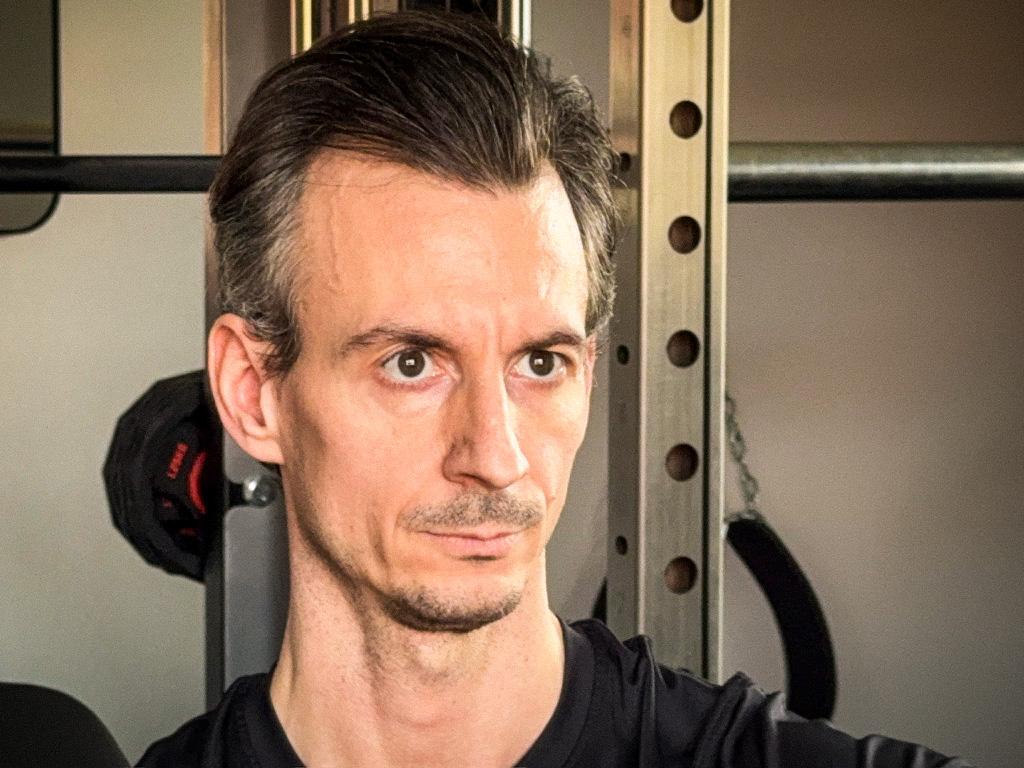
By Christian Schönbauer · Training since 1999 · Start weight under 50 kg · Peak +25 kg · Mag. · Founder, Hardgainer Performance Nutrition®
Updated: August 2026, content expanded.
Do I need new exercises all the time? No. Your muscles do not need surprise, they need progression. Muscle confusion is a marketing myth, and an expensive one for hardgainers (hard gainers). Hypertrophy comes from increasing mechanical tension on stable movement patterns, not from constant rotation. Switching every 2 weeks prevents the very tracking that makes progress visible.
This page does not replace medical or nutritional advice. All information is for general orientation. Study links lead to PubMed.
The Myth
“I need new exercises all the time, or nothing happens.”
The idea: muscles “get used to” exercises and stop growing. So you have to constantly vary to “surprise” the body. It sounds intuitive, and it’s the foundation of the “Muscle Confusion” principle.
The result: you switch exercises before you master them. You can’t measure progress because the comparison baseline keeps changing.
Why the Myth Persists
“Muscle Confusion” was popularised by fitness DVDs and programmes like P90X, not by sports science. The appeal was marketing: variety sells better than “do the same thing for 4 weeks, but heavier”.
There’s also a psychological effect: new exercises feel hard. New muscle soreness (DOMS) gets confused with growth. In reality, DOMS only shows that the movement was unfamiliar, not that it was more effective.
Social media amplifies the problem: daily “secret tip exercises”, exotic variations, cable tricks. That generates views, but not systematic muscle growth for hardgainers.
The Facts: Progression Beats Variation
The primary driver of muscle growth is mechanical tension, load × time under tension, progressively increased (Schoenfeld 2010).
Muscles don’t respond to surprise. They respond to progressive overload: more weight, more reps or more sets over time, on stable movement patterns.
The study by Baz-Valle et al. (2019) compared fixed exercise selection with varying selection in trained men over 8 weeks. Result: no significant difference in muscle thickness gains. The fixed group showed a trend toward better strength gains, because they could optimise movement patterns.
| Factor | Effect on Hypertrophy | Evidence |
|---|---|---|
| Mechanical Tension (Progressive Overload) | Primary driver, no growth without it | Schoenfeld 2010, Kraemer & Ratamess 2004 |
| Volume (Sets × Reps) | Dose-response relationship up to the MEV/MRV corridor | Schoenfeld et al. 2017 |
| Exercise Variation | No additional hypertrophy benefit over fixed selection | Baz-Valle et al. 2019 |
| Muscle Soreness (DOMS) | Not an indicator of growth, only of unfamiliarity | Schoenfeld & Contreras 2013 |
Mechanisms: Why Constant Switching Stalls Hardgainers
1. Neural Adaptation Takes Time
Every new exercise requires 3 to 6 weeks for your nervous system to optimise the movement pattern (Carroll et al. 2001). During this phase you’re improving your technique, not your muscle.
Switching every 2 weeks keeps you permanently in the neural learning phase, and you never reach the phase where progressive load forces the muscle to grow.
2. Tracking Becomes Impossible
Progression means: more than last week. But “more than last week” requires comparing the same exercise under the same conditions.
Constant switching means no baseline. You can’t tell whether you got stronger, only that the new exercise feels different. That’s not progress. That’s noise.
3. RPE/RIR Calibration Is Lost
An RIR 2 on an exercise you’ve trained for 6 weeks is precise. An RIR 2 on a new exercise is a guess. Without reliable intensity control you train either too light or too heavy, both sub-optimal for the MEV corridor.
4. Injury Risk Increases
New movement patterns under load = higher injury risk. Practised patterns under progressive load = controlled load increase. Especially hardgainers who start with relatively low weights benefit from the safety of well-practised movements.
Side-by-Side: Muscle Confusion vs. Systematic Progression
Example: 70 kg hardgainer · Bench Press · 8-week period
| Muscle Confusion | Fixed Selection + Progression | |
|---|---|---|
| Week 1 to 2 | Bench Press 60 kg × 8 | Bench Press 60 kg × 8 |
| Week 3 to 4 | Switch: Incline DB Press 20 kg × 10 | Bench Press 62.5 kg × 8 |
| Week 5 to 6 | Switch: Cable Fly 15 kg × 12 | Bench Press 65 kg × 8 |
| Week 7 to 8 | Switch: Dips Bodyweight × 10 | Bench Press 67.5 kg × 8 |
| Measurable Progression | Not comparable, 4 different exercises | +7.5 kg in 8 weeks, clearly documented |
| Neural Efficiency | 4× reset, never optimised | 8 weeks of optimisation, maximum recruitment |
| RIR Precision | Re-estimating every week | Calibrated from week 3 |
+7.5 kg measurable progression vs. 4 non-comparable exercises. Progress requires stability, not variety.
Practice: Lock In Core Exercises and Track
Three steps, actionable this week:
Step 1, Choose 4 to 6 core exercises
1 to 2 fixed exercises per muscle group, kept for at least 4 to 6 weeks. Prioritise compound movements: bench press, squat, deadlift, row, overhead press, pull-up.
Step 2, Track every session
Weight × reps × sets. Every session. No exceptions. If you don’t know what you did last week, you can’t progress. Use an app, a notebook or a Google Sheet, the medium doesn’t matter, consistency does.
Step 3, Build in progression
Goal: improve at least one variable each week. More weight (+1.25 to 2.5 kg), more reps (+1 to 2 reps) or more sets (+1 set). If nothing goes up → check recovery or nutrition, don’t switch exercises.
When Switching Exercises Makes Sense
- After a 6 to 8 week plateau despite adequate sleep, nutrition and deload
- With joint pain or issues that technique correction can’t resolve
- At the transition to a new mesocycle (planned periodisation)
- If an exercise doesn’t fit your anatomy (e.g. long forearms on bench press → test incline)
Rule of thumb: only when all other variables (sleep, calories, volume, intensity) are exhausted is an exercise switch the next option.
Common Mistakes (and Better Alternatives)
| Mistake | Problem | Better |
|---|---|---|
| Switching exercises every 1 to 2 weeks | Never leaving the neural learning phase. No tracking possible. | 4 to 6 weeks minimum per exercise. Then evaluate. |
| Using DOMS as a training indicator | DOMS shows unfamiliarity, not effectiveness | Progressive overload as indicator: is weight or rep count going up? |
| “My body has adapted to it.” | Adaptation = efficiency. Efficiency = more load possible = more growth | Adaptation is the goal, not the problem. Use it for progression. |
| Exotic exercises instead of compounds | Less load, less muscle mass involved, harder to progress | Compound base (80 %) + isolation as supplement (20 %) |
| Training without a logbook | Without data, no comparison. Without comparison, no progression. | Document every session: exercise, weight, reps, sets, RPE/RIR. |
Myth
“I need new exercises all the time, or nothing happens.”
Fact
Muscles grow through progressive overload, not through surprise. Stable exercises + tracking + patience = progress.
FAQ
Is Muscle Confusion completely useless?
As a hypertrophy strategy: yes. The evidence shows no advantage over fixed exercise selection (Baz-Valle et al. 2019). As a motivation trick for beginners, variation can be fun, but for measurable muscle growth, systematic progression is superior.
How often should I change my exercises?
Evaluate core exercises every 6 to 8 weeks, don’t automatically switch. As long as you’re progressing, there’s no reason to change. Isolation exercises can vary more frequently (every 4 to 6 weeks) since they require less neural optimisation.
What do I do if I hit a plateau?
Before switching the exercise: check sleep, nutrition (are you in a surplus?), training volume and recovery. Schedule a deload. If there’s still no progress after 2 to 3 weeks: vary the exercise (e.g. grip width, angle), don’t do a complete swap.
Why do I get sore from new exercises if DOMS doesn’t mean growth?
DOMS results from unfamiliar eccentric loading, from novelty, not effectiveness. A muscle that has been progressively trained for 6 weeks is growing, even without soreness.
Does this apply to beginners too?
Especially to beginners. In the first 8 to 12 weeks, neural adaptations dominate. The longer you train an exercise, the more the effect shifts toward actual muscle gains. Switching early prevents exactly this transition.
How does this connect to the nutrition myths?
Myths #1, #4 optimised your nutrition: enough calories, proper energy density, clean macros, stable appetite. Now the training block begins, and the first rule is: progression before variation. Next week Myth #6 deepens the topic of progression.
What the research says
Four papers behind the claims on this page
That mechanical tension is the primary growth driver and that exercise variation adds no extra benefit is consistently documented. Neural adaptation takes weeks, not days.
- Mechanical tension is the primary driver. Metabolic stress and muscle damage add to it but do not replace it. That is why rising load beats a new exercise. Schoenfeld, 2010
- Exercise variation produced no thickness advantage. In the direct comparison muscle growth did not differ, motivation did. Variation is an adherence tool, not a growth stimulus. Baz-Valle et al., 2019
- Neural adaptation takes weeks. A large part of early progress is coordination, not muscle. Switch the exercise before that and you throw the progress away. Carroll et al., 2001
- Volume drives growth, not selection. More weekly sets lead to more muscle up to a point. The question is how much, not how varied. Schoenfeld et al., 2017
What is not covered by the studies
The recommendation to keep a movement pattern for at least six to eight weeks is a practical derivation from the duration of neural adaptation. No study tests this exact interval in hardgainers.
Practical takeaway: change the numbers, not the exercises. Same movement, more load or more reps.
Conclusion
Muscle Confusion is a marketing concept, not a training principle. Your muscles don’t need surprise, they need progressive overload on stable, practised movement patterns.
Every exercise switch resets your nervous system, destroys your tracking baseline and makes you confuse soreness with progress. Real growth comes from patience, data and consistency.
Choose 4 to 5 core exercises. Train them for 4 weeks without switching. Track every session: weight × reps × sets. If the numbers go up, you’re growing.
Progression beats variation. Now the system behind it.
One clear mission per week in your inbox. No hype, no filler, plus new drops before anyone else.
 Hardgainer Hacks™ the moment you confirm. 10 strategies for real mass gain, straight to your inbox.
After signing up you get a confirmation email (double opt-in). Click it to confirm, otherwise nothing can be sent. Details on data processing in our Privacy Policy.
Reading & Resources
New exercises are not a stimulus, rising load is. Here is the tool that plans progression, and the terms behind it.
Go deeper Workout Plan Generator Builds a plan with fixed movement patterns and planned progression instead of guessing new exercises every week. Open the generatorContent is provided for general orientation and does not replace individual medical or nutritional advice.