
Hardgainer Knowledge Base
Everything I wish I had known as a hard gainer when I started in 1999 at under 50 kilos. Organised, linked, all in one place. You can work through it in order or jump straight to what you need, both work.
This page is the overview. Every pillar leads to its own page with exactly five columns. Not because of symmetry. Under five, something is missing. Over five, nothing more comes in that really counts.
| What you want | Where | What you get there |
|---|---|---|
| Understand a topic | Pillars | Six separate pages, five columns each. Every one stands on its own. |
| Look up a term | Glossary | 66 entries, DE and EN, cross-linked and pointing back to the pillar. |
| Check what actually holds up | Myth Busting | Two seasons, 20 myths, honestly taken apart. |
| Go deeper | Deep Dives | Eight articles that take a single topic all the way down. |
| Start with a plan | Tools | Calorie Calculator, MealPlan, Workout Plan. In that order. Plus the Guide. |
| First check if this is for you | Self-assessment | 9 questions. Afterwards you know your bottleneck type and where to start. |
The six pillars

Training for Hardgainers
Stimulus, volume, progression. Past a certain point, more sets bring nothing, they only leave you more broken. That is the honest message: training for hardgainers is dosage work, not a feat of strength.

Nutrition for Hardgainers
Caloric surplus, protein distribution, caloric density. If you do not eat enough, you do not build. Simple as that. The five columns show you how to hit the surplus reliably, and how to keep it from landing mainly in the belly.

Recovery for Hardgainers
Sleep, SRA, deload. Muscle does not grow in training, it grows in between. For us, with a tight recovery budget, this is the phase that decides whether the stimulus turns into progress or just into exhaustion.

Physiology for Hardgainers
Metabolism, muscle fibres, hormones, nervous system, appetite. Why your body behaves differently from an easy gainer’s. No blame, no excuse, biology. This is the foundation on which every other pillar sits.

System for Hardgainers
Baseline, tracking, Rate of Gain, iteration, review. Without numbers, every build-up is guesswork. Training and nutrition can be planned perfectly, if you do not measure and do not adjust, it stays chance whether it works.

Mindset for Hardgainers
Identity, patience, consistency, anti-comparison, plateau resilience. The body needs months. The head gets impatient after three weeks. Most people quit in that gap. This pillar is about not quitting exactly there.

When I started in 1999 at under 50 kilos, this did not exist. No structured source for hardgainers, no overview, no map. It took me 25 years to map the field myself, with many failures along the way. This Knowledge Base is what I would have needed back then. Six pillars, cleanly separated. Each with its five columns. Everything linked, everything navigable, everything built for hardgainers. Not bodybuilding content for somebody else with the word “hardgainer” pasted on top, but built for us from the ground up.
For quick lookup
Deep Dives, where it gets into the detail
Recovery · Sleep Sleep & Muscle Growth: Is 6 Hours Enough for Hardgainers? The freshest deep dive: why 6 hours is not enough for most hardgainers, when growth hormone peaks in deep sleep, and how much sleep you really need. With sleep zones, the hormonal interplay of cortisol and GH, a 4-point sleep protocol, and the honest answer on whether you can catch up on sleep.More deep dives in preparation: Progressive overload for hardgainers · The 8-week mesocycle · Identity work for hardgainers. If you want to be notified when they go live: Hardgainer Mission Briefing™.
The tools, in this order



If you are right at the beginning
Self-testAre you actually a hardgainer?Seven questions, one index from 0 to 100. The test separates predisposition from execution and tells you whether it is your body or what you do.Start the test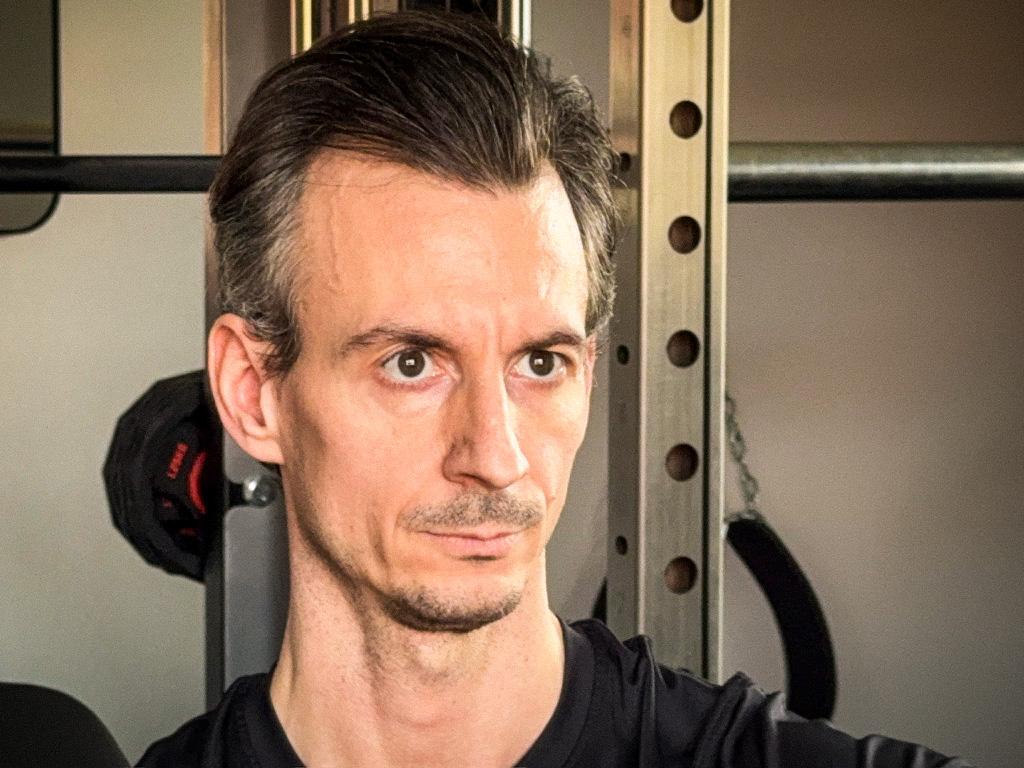
Frequently asked questions
What is a hardgainer?
A hardgainer is someone who struggles to gain bodyweight and muscle despite training and discipline. The causes are rarely willpower. They are high NEAT, early satiety and an energy turnover that runs higher than expected. Why your body responds differently sits under Physiology. Whether you actually are one, the self-assessment answers.
Why am I not gaining weight despite training?
In almost every case because too little energy arrives, not because too little training happens. Needs get underestimated, good days get overrated, the weekend drops out of the count. The second reason is a high turnover from everyday movement. Both belong to Nutrition and Physiology.
How much does a hardgainer need to eat?
Maintenance calories plus a moderate surplus of roughly 300 kcal. Not more, because the rest lands as fat or gets burned back off through NEAT. Your personal figure comes from the Calorie Calculator, the full derivation sits in the deep dive Calorie Requirements for Hardgainers.
How often and how much should a hardgainer train?
Less than most people think, but more consistently. What decides the outcome is volume between MEV and MAV, not the maximum number of sets. Train past your recovery budget and you collect fatigue instead of progress. The steering sits under Training, the numbers in the deep dive Training Volume.
How important is sleep for muscle growth?
Muscle does not grow in training, it grows in between. For hardgainers on a tight recovery budget, sleep is therefore not a side topic. It is the phase that turns a stimulus into progress. Everything on it sits under Recovery and in the deep dive Sleep and Muscle Growth.
How long does it take to see results?
Longer than your head wants. A sensible build-up runs at 0.25 to 0.5 per cent of bodyweight per week as a 7-day average, see Rate of Gain. On the scale that is barely visible. Over twelve weeks it very much is. How to measure it sits under System, how to sit out the wait under Mindset.
Do hardgainers need supplements?
Need, no. Useful, sometimes. A supplement is a delivery format for calories or nutrients you cannot chew, which solves a volume problem, not a nutrition problem. If you already hit your target with food, you gain nothing. The order stays calories, training, recovery. Details under Nutrition.
Where do I start?
Three sensible entry points. The self-assessment clears up the basic question in two minutes. The Hardgainer Guide walks you step by step through the complete build-up. And if you want to understand the field first, begin at one of the six pillars on this page.
One clean step every week.
One clear mission per week in your inbox. No hype, no filler, plus new drops before anyone else.
 Hardgainer Hacks™ the moment you confirm. 10 strategies for real mass gain, straight to your inbox.
After signing up you get a confirmation email (double opt-in). Click it to confirm, otherwise nothing can be sent. Details on data processing in our Privacy Policy.