Thyroid Hormones (T3 / T4)
T3 and T4 control how fast your metabolism runs — from basal metabolic rate to heat production and digestion. For hardgainers this means: your thyroid co-determines the baseline tone of your energy expenditure. But it never replaces structured calorie management, training or sleep.
Context and practice orientation. Not a medical diagnosis or therapy recommendation. If you suspect a thyroid condition: lab work and medical assessment — mandatory, not optional.
Thyroid hormones in 20 seconds
Your thyroid mainly produces T4 — a precursor hormone. Part of it gets converted to T3, the active form, in your liver and muscles. The whole system is regulated by a hormone axis in the brain (TSH). T3 and T4 determine how much energy your body burns at rest.
- Too much (hyperthyroidism): higher resting metabolic rate, fast pulse, heat production up — sounds useful, but stresses your heart and body.
- Too little (hypothyroidism): lower resting metabolic rate, fatigue, cold sensitivity, sluggish digestion — that is not a lifestyle issue, that belongs to a doctor.
- For hardgainers this means: Whether you gain easily or not does not depend primarily on T3/T4. It depends on protein, lean surplus, training and NEAT. Thyroid hormones are one adjustable lever — not a fixed fate.
System anchors: maintenance calories, TDEE, Metabolism System.
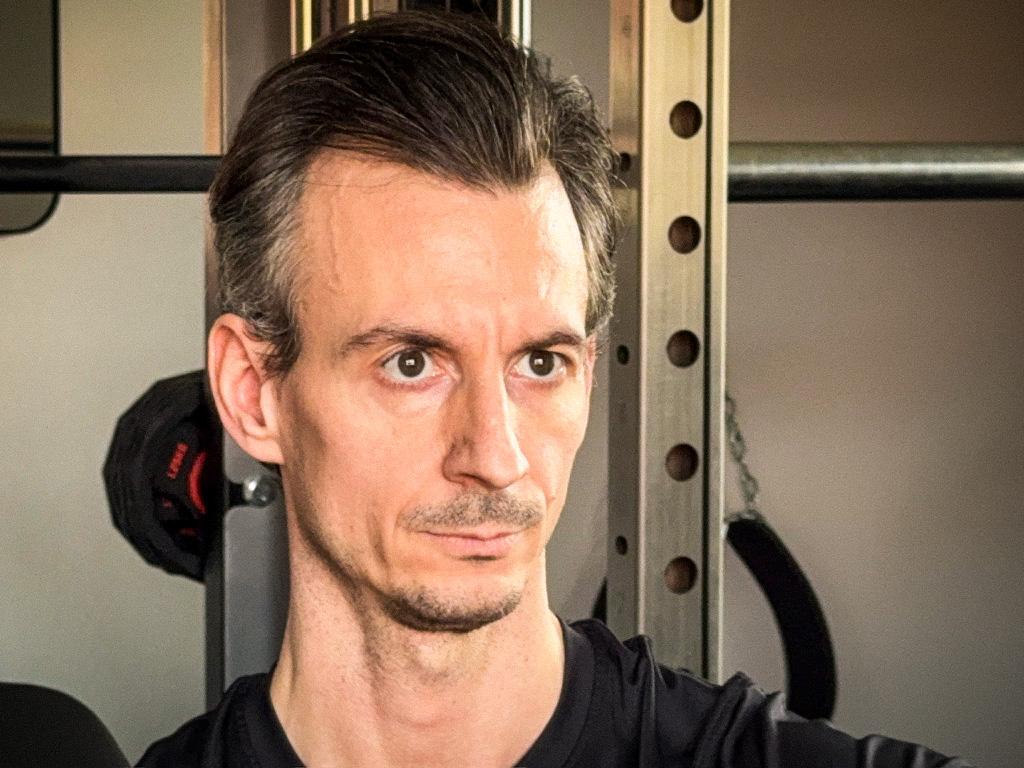
People around me were convinced I had an overactive thyroid — that thin, that restless, never gaining weight. I got it checked: values unremarkable. The truth was simpler: I was eating less than I thought and my NEAT was higher than expected. Once I corrected that, progress came — without anything changing about my thyroid.
When to see a doctor — and when not
Most hardgainers do not have a thyroid condition. But there are clear signals you should not ignore.
- See a doctor: Persistent fatigue despite 7+ hours of sleep, strong cold sensitivity, resting heart palpitations, significant hair loss or weight changes without any calorie change. Then: get TSH, fT4, fT3 checked — do not self-diagnose via Google.
- Not a doctor visit: "I just can't gain weight" with unclear calorie intake. Track cleanly for 14 days first, then draw conclusions. In 9 out of 10 cases it is NEAT or intake — not the thyroid.
- Rule of thumb: For training and nutrition you steer via calorie corridor, weight trends, steps and subjective energy. Lab values come as a supplement via your doctor — not as a DIY project.
What you control — and what you don't
You cannot dial up T3/T4 directly. What you control: the conditions under which your thyroid works steadily.
- No crash diets: Extreme deficits suppress T3 temporarily and slow your TDEE. Better: moderate deficits with a clear duration and a focus on protein.
- Building with structure: A defined lean surplus gives your hormonal system stable signals — enough energy, clear meal structure, consistent training frequency.
- Sleep and stress: Chronic sleep deprivation and sustained stress disrupt hormonal axes — including the thyroid — and push cortisol up. See Myth #6.
- Medicine before self-experimentation: Levothyroxine is not a muscle-building booster. Dosage, use and target values belong in medical hands.
Practice: 14-day check
- Day 0 — Set your base: Lock in your calorie corridor via the calorie calculator, define a sleep window, fix a training plan with clear progression via RIR.
- Daily — Document: Morning bodyweight, steps as a NEAT proxy, subjective energy (1–10), cold/heat sensitivity. Build weekly averages — do not overhaul everything based on a single day.
- Day 14 — Check the trend: Weight stagnating despite "very little food" and extreme fatigue? First check calories realistically (tracking, weekly averages), then consider the thyroid — not the other way round. If symptoms persist: medical assessment.
Spread MPS across the day, minimise MPB. Replenish glycogen — T3/T4 modulate your BMR, but ATP and carbohydrates deliver the fuel.
Common misconceptions
- "My metabolism is broken — because of my thyroid, nothing works." A genuine condition does affect energy expenditure — yes. But for most people it is calories, NEAT, training and sleep that need fixing first. The thyroid is one adjustable lever, not a free pass. See What is a Hardgainer?
- "Thyroid hormones as a diet shortcut are fine if you train." No. Misuse damages heart, muscles and bones. Priorities: protein, creatine, calorie structure and training quality. See Myth #10.
- "As long as the thyroid is fine, calories don't matter." Even with perfect T3/T4 levels: without a structured lean surplus, clear training and a predictable rate of gain, muscle building becomes guesswork.
"Five to six hours of sleep are enough for muscle growth"
False. Chronic sleep deprivation disrupts hormonal axes — including the thyroid — and pushes cortisol up. A stable sleep window often beats any supplement. Deep dive: Myth #6.
Frequently asked questions
What do thyroid hormones T3 and T4 do in the body?
T4 is the precursor form, T3 the active one. Both control your basal metabolic rate, heat production, heart rate and digestion speed. Too much raises energy expenditure, too little lowers it and promotes fatigue and cold sensitivity.
Can thyroid problems block muscle building in hardgainers?
A genuine thyroid condition measurably affects energy expenditure. In practice, however, calories, NEAT, training and sleep are the variables that need fixing first for most people. Thyroid hormones are one adjustable lever — not a fixed fate that prevents building.
When should I have my thyroid levels checked by a doctor?
Persistent fatigue despite 7+ hours of sleep, strong cold sensitivity, resting heart palpitations, significant hair loss or unexplained weight changes without any calorie change. Then get TSH, fT4 and fT3 checked — lab values alone do not replace clinical interpretation.
Studies and Evidence
Research shows that T3/T4 measurably influence energy expenditure — but the levers for building and dieting remain calorie management, training and recovery. The thyroid sets the baseline tone, not the outcome.
- Mullur et al. (2014) — Thyroid Hormone Action and Energy Expenditure. PubMed 31286098
- Ciloglu et al. (2005) — Exercise intensity and its effects on thyroid hormones. PubMed 16380698
- Eliakim et al. (2006) — The impact of exercise on thyroid hormone metabolism in children and adolescents. PubMed 16175495
Practical takeaway: Thyroid hormones set the baseline tone — results come from surplus, training and sleep. If symptoms appear: doctor, not supplement stack.
That wasn't just reading. That was commitment.
If you want progress, you need a system. Get the Hardgainer Mission Briefing™ and execute one thing cleanly every week.
By signing up you receive the download link for Hardgainer Hacks™ (PDF) and the Hardgainer Mission Briefing™. Privacy Policy.
Further reading
Directly related
- Leptin · Ghrelin · Cortisol · Insulin
- TDEE · Maintenance calories · Lean surplus
- NEAT · EAT · TEF
Context and system
Content provides general practice orientation and does not replace individual medical or nutritional advice.