Protein
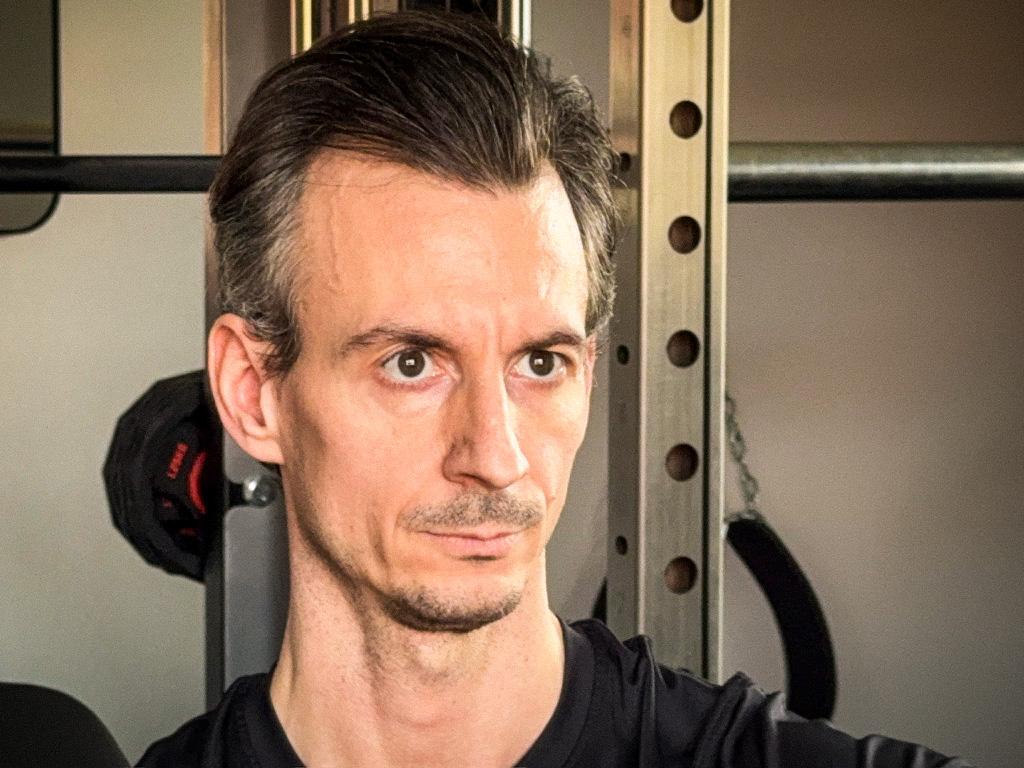
By Christian Schönbauer · Training since 1999 · Start weight under 50 kg · Peak +25 kg · Mag. · Founder, Hardgainer Performance Nutrition®
Building block number one for muscle growth: protein supplies essential amino acids, triggers MPS and dampens MPB. For a hard gainer the question is never just how much, but how much room it leaves for calories. What matters is intake, distribution, timing and quality.
Note
This page gives context and guardrails. It is not individual medical, nutrition or training advice. Suitability and tolerability have to be assessed individually. If in doubt, talk to a qualified professional.
Protein in 20 seconds
Protein is made up of amino acids. For hypertrophy, what counts is the balance of MPS (synthesis) vs. MPB (breakdown). Training provides the stimulus; protein supplies the building blocks and the leucine signal.
- Key role: protein influences satiety, thermogenesis (TEF) and recovery.
- Leucine threshold: aim for ~2 to 3 g of leucine per meal (depends on source and portion size).
- Quality: a complete amino acid profile and good digestibility (DIAAS/PDCAAS) are advantageous.
Hypertrophy is a systemic process: respect the SRA window, secure adequate energy intake, and progressively manage training via RIR/RPE.
Where it sits in the system
- Completeness: animal sources (dairy/eggs/fish/meat) are generally complete; plant-based intake should be balanced through combinations (e.g. rice + pea, grain + legume).
- Leucine: target ~2 to 3 g leucine per meal. Whey, dairy products and most animal sources deliver this easily; plant-based sources may require larger portions or blends. See also: leucine threshold.
- Digestibility: whey/casein/skyr/quark are practical choices; plant-based shakes with an enzyme blend can improve tolerability.
Isolated BCAAs do not replace a full EAA-complete portion. The entire essential amino acid matrix is what drives the signal.
The numbers that matter
Reference values for healthy, training adults during a muscle-building phase:
| Situation | g protein per kg bodyweight | Note |
|---|---|---|
| Standard building phase | ~1.6 to 2.2 g/kg | Sweet spot for most hardgainers. |
| High volume / deficit | ~2.2 to 2.6 g/kg | Can be useful periodically at very high training volumes or during a diet. |
| Minimum effective | ≥1.2 to 1.4 g/kg | Below this level the risk of suboptimal progression increases. |
- Very low or very high body fat? Estimate based on lean body mass (LBM) instead.
- Protein ≠ calorie substitute: maintenance calories & lean surplus remain the framework.
What 30 g of protein actually looks like
Grams per kilogram stay abstract. Each of these portions delivers roughly 30 g of protein, about one meal for a 70 kg hard gainer.
| Source | Portion for approx. 30 g protein | Calories that come with it |
|---|---|---|
| Chicken breast, raw | 130 g | approx. 140 kcal |
| Low-fat quark | 250 g, one tub | approx. 170 kcal |
| Skyr | 280 g | approx. 180 kcal |
| Harzer cheese | 100 g | approx. 125 kcal |
| Eggs | 4 medium | approx. 320 kcal |
| Tuna in water, drained | 115 g, one can | approx. 130 kcal |
| Salmon fillet | 150 g | approx. 310 kcal |
| Beef mince, 5 % fat | 145 g | approx. 190 kcal |
| Whey isolate | 35 g powder | approx. 130 kcal |
| Lentils, cooked | 330 g | approx. 380 kcal |
| Tofu, firm | 230 g | approx. 290 kcal |
| Rolled oats | 230 g | approx. 850 kcal |
Guideline values, products differ. When in doubt the label on the pack decides.
The last column is the part that matters for you. The same 30 g of protein costs you anywhere between 125 and 850 calories of room in your stomach. As a hard gainer you deliberately pick the sources that bring calories with them, not the leanest ones. For someone cutting, the exact opposite applies, and that is why most protein guides do not work for you.
Worked example: 70 kg, gaining phase
A target of 2.0 g per kilogram gives 140 g of protein per day. Split across four meals that is 35 g per meal. It looks like this:
- Breakfast: 250 g quark with 60 g oats, a banana and 20 g peanut butter, around 38 g protein and 650 calories.
- Lunch: 130 g chicken breast, 120 g rice weighed dry, vegetables, olive oil, around 34 g protein and 700 calories.
- Afternoon: shake with 35 g whey, 300 ml whole milk, oats, around 40 g protein and 550 calories.
- Dinner: 145 g beef mince, pasta, cheese, around 38 g protein and 800 calories.
That is roughly 150 g of protein and 2,700 calories. The protein is the easy part. The calories are where it falls apart, which is why the protein number never stands on its own here, it always sits next to maintenance calories and Lean Surplus.
How to measure it
Consistency beats timing, but smart distribution optimises the signal.
- Meal anchors: 3 to 5 protein-rich meals per day with ~0.3 to 0.5 g/kg each.
- Pre-/post-training: placing one meal close to your session (±2 to 3 h) is practical.
- Before bed: 20 to 40 g of a slow-digesting source (e.g. casein/skyr) can cover the overnight period.
For smaller individuals or snack-based meal structures, 4 to 5 smaller portions work better; larger athletes can manage with 3 to 4 bigger ones.
Protein is not EAA and not BCAA
Three terms that sit next to each other on the shelf and get mixed up constantly. The difference decides whether a serving actually triggers the building signal.
Complete protein
Delivers all nine essential amino acids in usable amounts, plus calories and micronutrients. It triggers muscle protein synthesis and keeps it elevated.
Sources: dairy, eggs, meat, fish, combined plant sources.
EAA and BCAA
EAA are the nine essential amino acids in isolation. BCAA are only three of them. Without the rest, the signal stays incomplete, no matter how much leucine is in there.
Extra downside for a hard gainer: almost no calories, at the price of a full meal.
In practice: one serving of real protein beats any amino acid powder. BCAA solve a problem you do not have.
In practice: 14 days
- Day 0: set a daily target (e.g. 2.0 g/kg) and define meal slots (e.g. 4×).
- Daily: track portions (g protein), log training, and calculate a weekly average bodyweight.
- Day 14: RoG too flat? Review intake and distribution, test +10 to 15 % protein from whole foods, or adjust total energy.
Protein creates the prerequisite, adaptation comes through planned progression and recovery within the SRA window.
My first protein powder was in 1999. The tub said vanilla, it tasted like wet cardboard. We stuffed in everything anyway, as long as it was protein. Three shakes a day, canned tuna, quark until we could not look at it anymore. It made us feel sick, and it got us nowhere. Today a good shake tastes like a milkshake, and there are far more sources you actually enjoy eating. The problem was never too little protein. It was too few calories.
Tolerability and satiety
- GI issues: large single portions, high amounts of sweeteners/sugar alcohols, or unfamiliar fibre sources can cause discomfort split portions, vary sources.
- Lactose: if sensitive, test low-lactose products (skyr/quark/hard cheese) or whey isolate.
- Plant-based: pay attention to blending and portion size; enzyme blends can help.
Pre-existing conditions or medication? Get individual medical advice. With persistent complaints, adjust source or dose.
The satiety effect is your actual problem
Protein fills you up more than carbohydrate or fat. Every diet guide lists that as an advantage. For you it is the brake: the plate is full before the calories are there. Going to 2.5 g per kilogram out of caution pushes out exactly the energy mass is built from.
Then there is the thermic effect. A noticeable share of protein calories is lost in digestion, clearly more than with carbohydrate or fat. Build the surplus out of protein and you pay twice, once in satiety and once in loss.
Where it goes wrong
- "More protein is always better." Wrong. Beyond a certain point, training and energy are the limiting factors, not protein.
- "Shakes are mandatory." No. They are convenient, but whole foods work just as well.
- "BCAAs are enough." No. Without a complete essential amino acid profile, MPS remains suboptimal.
Related deep-dives: MPS, MPB, SRA, Rate of Gain.
Common questions
How much protein does a hardgainer need per day?
During a muscle-building phase, the sweet spot for most hardgainers is 1.6 to 2.2 g of protein per kg of bodyweight per day. At very high training volumes or during a calorie deficit, 2.2 to 2.6 g/kg can be useful for certain periods. Below 1.2 to 1.4 g/kg the risk of suboptimal progression increases. At very low or very high body fat levels, estimating intake based on lean body mass is more accurate.
When and how often should I spread protein intake throughout the day?
Three to five protein-rich meals per day with around 0.3 to 0.5 g of protein per kg of bodyweight each works well. Having one meal close to your training session (within 2 to 3 hours) is practical but not essential. Twenty to forty grams of a slow-digesting source such as casein or skyr before bed can cover the overnight period. Consistent daily intake matters more than precise timing.
Are protein shakes necessary or do whole foods work just as well?
Shakes are convenient but not mandatory. Whole foods work equally well as long as the daily target and meal distribution are met. What matters is a complete amino acid profile with sufficient leucine per serving, around 2 to 3 g. Isolated BCAAs do not replace a full serving containing all essential amino acids.
From term to practice: your tools
Knowing the number is step one. Step two is spreading it across meals you will actually eat. These two tools turn your profile into numbers and into a plan.


"More protein, more muscle."
Wrong. Past roughly 1.6 to 2.2 g per kilogram, extra protein adds no extra muscle. It does fill you up, and it pushes out exactly the carbohydrate and fat calories you need for the surplus.
Matching deep dive: Hardgainer Myth Busting, Season 2, Myth 3
What the research says
Four papers behind the claims on this page
The ceiling, the per-meal distribution, the satiety effect and the thermic effect are all consistently documented. For a hard gainer, that flips the picture earlier than most people expect.
- Beyond roughly 1.6 g per kilogram per day, more protein adds nothing. Across 49 studies and 1,863 participants the break point sits there, with the upper confidence bound at 2.2 g. That is exactly where the corridor in the table above comes from. Morton et al., British Journal of Sports Medicine, 2018
- Distribution beats the size of a single meal. Three to five servings of 0.3 to 0.5 g per kilogram hit the leucine threshold reliably. More in the same meal does nothing. Stokes et al., Nutrients, 2018
- Protein is more satiating than any other macronutrient. For people trying to lose weight that is the benefit. For you it is the problem: the plate is full before the calories are there. Veldhorst et al., Physiology & Behavior, 2008
- Part of the protein calories is lost in digestion. The thermic effect of protein is markedly higher than that of carbohydrate and fat. Build your surplus out of protein and you give a share of it straight back. Halton and Hu, Journal of the American College of Nutrition, 2004
What the studies do not cover
The recommendation to sit at the lower end of the corridor as a hard gainer and spend the free calories on carbohydrate and fat is a practice conclusion. It follows from satiety and the thermic effect, not from a direct trial of high versus moderate protein in hard gainers eating in a surplus.
Practical takeaway: 1.6 to 2.2 g per kilogram is enough. Anything beyond that costs you room for calories you actually need.
Protein understood. Now the system behind it.
One clear mission per week in your inbox. No hype, no filler, plus new drops before anyone else.
 Hardgainer Hacks™ the moment you confirm. 10 strategies for real mass gain, straight to your inbox.
After signing up you get a confirmation email (double opt-in). Click it to confirm, otherwise nothing can be sent. Details on data processing in our Privacy Policy.
Descriptive information for orientation purposes only, not a therapy, dietary, or training prescription. Account for individual differences and possible contraindications.
Reading & Resources
Protein has a ceiling, calories do not. Here is the main topic this term belongs to, plus the terms around it.
Main topic Nutrition for Hardgainers Surplus, energy density and distribution. The pillar where protein is only one lever among several. To the main topicContent here is general practice guidance and does not replace individual medical or nutritional advice.