Myth #9: “I have to be active every day or I’ll get fat.”

By Christian Schönbauer · Training since 1999 · Start weight under 50 kg · Peak +25 kg · Mag. · Founder, Hardgainer Performance Nutrition®
Updated: August 2026, content expanded.
How many rest days does a hardgainer need? Enough for the stimulus to land. Muscles do not grow during training, they grow during recovery. A hardgainer (hard gainer) who pushes every single day trains against his own progress. Rest days are not downtime, they are the part where the stimulus turns into muscle.
This page does not replace medical or nutritional advice. All information is for general orientation. Study links lead to PubMed.
The Myth
“I have to be active every day or I’ll get fat.”
The assumption: rest days mean a caloric deficit, or worse, muscle loss. If you’re not training, you’re losing. Rest is rust. Every day off is wasted time that progress won’t forgive.
The result: Hardgainers train too often, too hard, without enough recovery. The nervous system is chronically strained, the hormonal axis under constant stress, appetite drops, and the scale still doesn’t move. Not because too little training is happening, but because recovery never does.
Why the Myth Persists
Because it feels like discipline.
In fitness culture, activity equals progress. More is better. Every day in the gym is commitment. A day off is laziness. Social media reinforces this: nobody posts that they’re resting today. The person training every day documents their effort.
The problem: this logic applies to calorie-restricted endurance athletes with different adaptation goals. For a hardgainer whose aim is maximum MPS with minimal catabolically-driven caloric expenditure, it is counterproductive.
And the second part of the myth, “or I’ll get fat”, is physiologically unrealistic for hardgainers who are already struggling to hit a surplus. A rest day does not increase fat mass. A rest day with adequate food builds muscle.
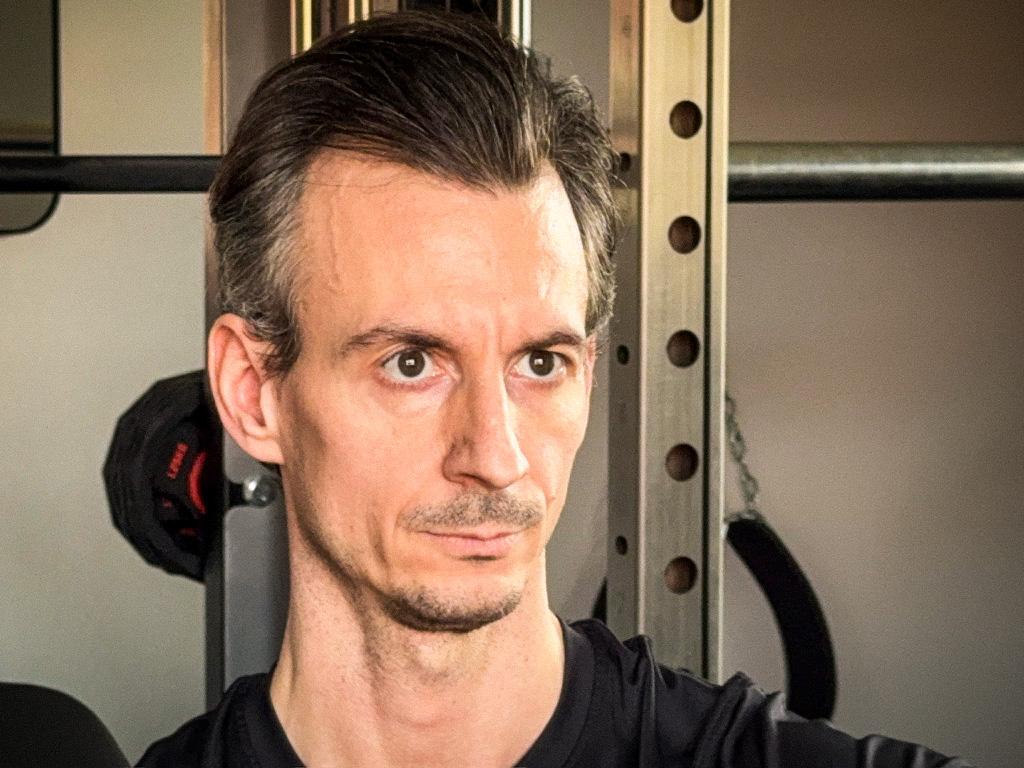
There was a phase where I trained six days a week. Every day something, if not strength, then cardio, if not cardio, at least stay active. After three months I had more fatigue than muscle. No appetite, no progress, no drive left. The day I started genuinely resting was the day I started growing again.
, Christian SchönbauerWhat Actually Happens on a Rest Day
Supercompensation: Growth Is a Recovery Process
Training sets a stimulus, it breaks down muscle protein, depletes glycogen stores, and taxes the nervous system. The adaptation, more muscle mass, more strength, does not happen during training. It happens afterwards. During the recovery phase, the body does not just rebuild to baseline, it builds beyond it: supercompensation.
If the next stimulus arrives before this process is complete, it interrupts it. The result is accumulated fatigue instead of accumulated adaptation.
Hormonal Axis Under Chronic Stress
Chronic overtraining suppresses the testosterone-to-cortisol balance. Cortisol rises, testosterone falls, a hormonal environment that is catabolic and actively inhibits muscle growth. Research on strength athletes showed that just one week of intensive training without adequate recovery led to a gradual decline in serum testosterone, with restoration only after a rest day (Häkkinen et al., 1988).
MPS Needs Time
Muscle protein synthesis following a strength session remains elevated for 24 to 48 hours. During this window the body is actively building, provided sufficient protein and calories are available. Closing that window with another hard session before it completes means competing with your own repair process.
Sleep as an Anabolic Lever
The majority of growth hormone release occurs during deep sleep. Sleep deprivation not only impairs recovery, it raises cortisol, lowers testosterone, and promotes muscle breakdown even without training (Dattilo et al., 2011). A rest day with 8 hours of sleep and adequate calories is active muscle building.
The Facts: Getting Fat from Rest Is Not a Real Risk for Hardgainers
Fat gain comes from a sustained caloric surplus, not from one or two rest days. For hardgainers who are already struggling to hit a surplus at all, the fear of resting is physiologically unwarranted.
On the contrary: overtraining that suppresses appetite, chronically elevates cortisol, and reduces training quality creates exactly the conditions under which hardgainers don’t grow. Two to three effective sessions per week with complete recovery in between beats five half-hearted sessions under chronic fatigue in every measurable way.
You don’t grow during training. You grow because you trained, and then rested.
What a Good Rest Day Actually Means
Not Inactivity, But No Load
A rest day does not mean lying on the sofa all day. Walking, light stretching, mobility work, all of that is fine and can even support recovery. What gets avoided: any form of intense load that taxes the nervous system or interrupts the recovery process.
Nutrition on Rest Days: Don’t Cut Back
Common mistake: eating less on rest days because “there was no training today”. The opposite is true. On a rest day, supercompensation is running at full speed, protein requirements stay identical, caloric needs drop only marginally. Eating less on a rest day actively interrupts the building process.
How Many Rest Days?
For most natural hardgainers, 2 to 3 rest days per week is optimal. This allows 3 to 4 training sessions with complete recovery in between. More training days rarely increase progress for hardgainers, they increase fatigue.
Comparison: Overtraining vs. Optimal Frequency
| Parameter | 6 to 7 Days/Week | 3 to 4 Days + Rest |
|---|---|---|
| Supercompensation | Interrupted, accumulated fatigue | Fully completed |
| Cortisol / testosterone | Cortisol chronically elevated | Hormonal axis in balance |
| Training quality | Declining due to fatigue | Consistently high |
| Appetite | Suppressed by chronic stress | Stable, calorie target reachable |
| MPS window | Closed by the next session | Fully utilised |
| Long-term progress | Plateau or regression | Continuously upward |
Common Thinking Errors around Rest Days
| Thinking Error | Why It Hurts | Correction |
|---|---|---|
| “Eat less on rest days” | Actively interrupts supercompensation | Same protein intake, similar calories |
| “Rest = laziness” | Leads to chronic overload | Rest is a programmed part of training |
| “I have to do cardio at least” | Taxes the nervous system, delays recovery | Walking fine, intense cardio session, no |
| “More training = more muscle” | Only true up to your recovery capacity | Volume is not an end in itself, quality beats quantity |
Myth
“I have to be active every day or I’ll get fat.”
Fact
Muscle growth happens during recovery, not during training. For hardgainers, overtraining is one of the most common invisible brakes.
FAQ
Will I really not get fat from rest days?
Not from rest days alone. Fat gain comes from a sustained caloric surplus over weeks, not from one day without training. For hardgainers who are barely eating above maintenance, this risk is minimal. A rest day with adequate protein and calories is metabolically active muscle building.
How do I know if I’m overtrained?
Typical signals: declining performance over several weeks despite consistent training, sleep problems, elevated resting heart rate, persistently low mood or loss of motivation, appetite suppression, increased injury susceptibility. If two or more of these apply and you haven’t had a training break recently: likely overtraining.
Can I do any sport at all on a rest day?
Light activity is fine and can actually support recovery by improving circulation. Walking, mobility work, light stretching, no problem. What to avoid: intense cardio sessions, heavy strength sessions, or sport to exhaustion. The question is not whether you move, but whether you additionally load the nervous system.
How many training days per week is optimal for hardgainers?
For most natural hardgainers: 3 to 4 sessions per week with complete recovery in between. That can be a push/pull/legs split, an upper/lower split, or a full-body 3-day scheme. What matters is not the scheme, but that every session happens with a fresh nervous system and fully replenished glycogen stores.
What should I eat on a rest day?
Roughly the same as on training days. Caloric needs drop slightly on rest days (no training expenditure), but protein requirements stay identical. Supercompensation needs building material, and that is amino acids, not a break from intake. Target: 1.6 to 2.2 g protein/kg, calories slightly below a training day, but not in deficit.
What the research says
Three papers behind the claims on this page
That recovery is part of the adaptation rather than an interruption of it is well documented in sports science. Sleep loss pushes the same hormones in the wrong direction.
- One intense week without a break lowers testosterone. In strength athletes the serum value dropped across the week and recovered clearly after one rest day. The load is measurable, not a feeling. Häkkinen et al., 1988
- Sleep loss tips the hormonal balance towards catabolism. Less sleep raises cortisol and lowers testosterone and growth hormone. This happens without any extra training. Dattilo et al., 2011
- The building stimulus runs over hours, not minutes. The elevated muscle protein synthesis after a session needs a window in which the next stimulus is not already sitting on top of it. Morton et al., 2018
What is not covered by the studies
The specific recommendation of one to two rest days per week is a practical derivation from recovery duration and frequency. No study tests exactly this pattern in hardgainers.
Practical takeaway: plan the rest day like a session. What is not in the plan does not happen.
Bottom Line
Being active every day sounds like discipline, for hardgainers, it is often a brake. Supercompensation needs time. The hormonal axis needs relief. Appetite needs rest to stay stable.
Two to three rest days per week are not a concession to laziness. They are the part of the training plan that makes the other days count. You won’t get fat from a rest day, but you will get stronger if you give it what it needs: enough protein, enough calories, enough sleep.
The rest day is not the enemy of progress. It is the reason progress is possible.
Recovery understood. Now the system behind it.
One clear mission per week in your inbox. No hype, no filler, plus new drops before anyone else.
 Hardgainer Hacks™ the moment you confirm. 10 strategies for real mass gain, straight to your inbox.
After signing up you get a confirmation email (double opt-in). Click it to confirm, otherwise nothing can be sent. Details on data processing in our Privacy Policy.
Reading & Resources
Growth happens between sessions. Here is the tool that plans load and rest, and the terms behind it.
Go deeper Workout Plan Generator Spreads load and rest days across the week instead of adding more every day and hoping for progress. Open the generatorContent is provided for general orientation and does not replace individual medical or nutritional advice.