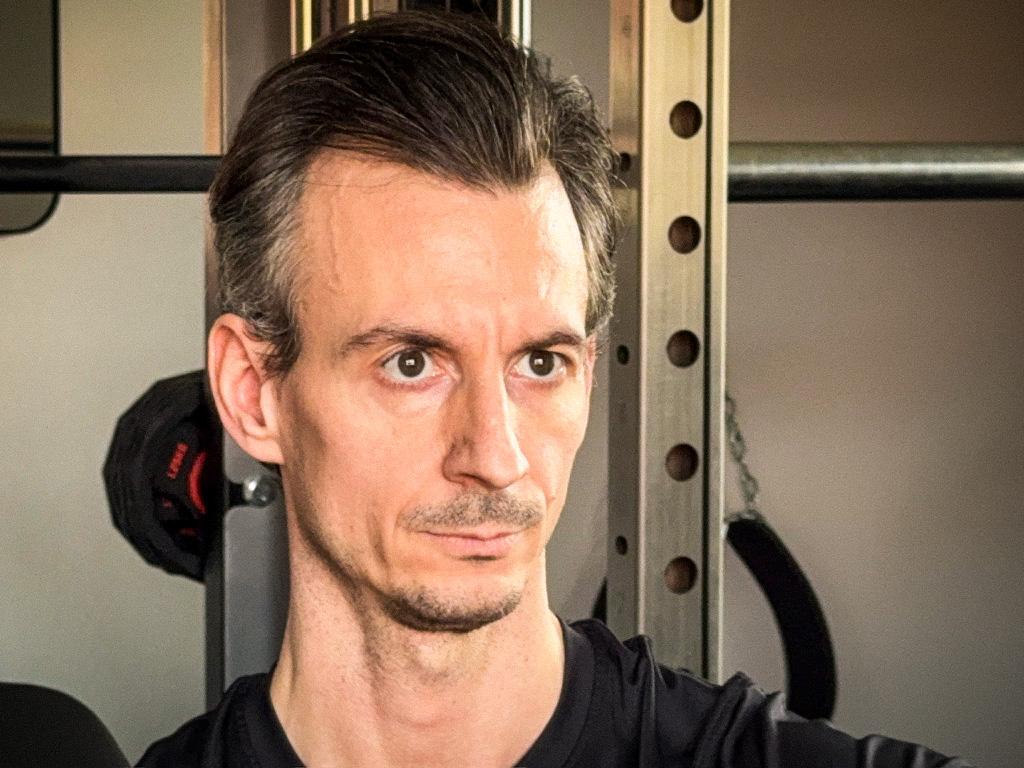
Growth Hormone (Somatotropin)
Growth hormone is one of the signals your body uses to build tissue and recover. The strongest pulses come during deep sleep. For hardgainers this means: when your sleep, your surplus and your training are dialled in, the hormone does its part. Trying to tweak it in isolation gets you nowhere.
Context and practice orientation. Not individualised medical, nutrition or training advice. Consult a professional if in doubt.
Growth hormone in 20 seconds
Your body releases growth hormone mainly during deep sleep. It acts via IGF-1 on recovery, tissue building and fuel use. Sounds like the perfect lever — but it is not one you can pull in isolation.
- Signal, not a switch: Muscle gain is driven by training and protein. Growth hormone supports — it replaces neither protein nor progression.
- Part of a system: Together with insulin, cortisol and testosterone it forms the hormonal framework. None of them works alone.
- For hardgainers this means: High NEAT and too few calories will stall progress — no matter how good your hormone levels look.
System anchors: maintenance calories, metabolism, BMR.
For years I chased the quick hormone hack — ZMA, tribulus, you name it. What actually made the difference: consistent sleep, a clean surplus and progression in training. The hormones took care of themselves once the system was right.
Sleep: the central lever
The strongest growth hormone pulses happen during deep sleep. If you regularly get less than 7 hours, you limit not just hormone output but also recovery and next-day training quality. No supplement makes up for that.
- Target: 7–9 hours per night, ideally at the same time. Not perfect, but consistent.
- Caffeine cut-off: 6–8 hours before bed. Even if you think it does not bother you — your deep sleep says otherwise.
- Tracking: You do not need a sleep tracker. But if you have one, watch the deep sleep phase, not the overall score.
Full breakdown: Myth #6 — "5–6 hours of sleep are enough".
What you control — and what you don't
You cannot dial up your growth hormone directly. What you can control: the conditions under which your body works best.
- Energy availability: Lean surplus over chronic deficit. Your body does not build when it is starving. Fine-tune via Rate of Gain.
- Training: Progressive stimulus in the effective range — MEV to MRV, steered by RIR. Not more, not less.
- Stress: Chronic stress pushes cortisol up and drags the entire hormonal framework down. That is not a lifestyle tip, that is physiology.
Practice: 14-day check
- Day 0 — Set your base: Lock in your calorie corridor, define a sleep window (same time, 7+ hours), training plan with clear targets per lift.
- Daily — Document: Morning bodyweight, sleep duration, steps as a NEAT proxy, training with RIR. Build weekly averages.
- Day 14 — Check the trend: Rate of Gain too flat? Fatigue rising? Then review energy intake, NEAT and sleep together — not just one variable.
Spread MPS across the day, minimise MPB. Replenish glycogen — carbohydrates are your fuel, not your enemy.
Common misconceptions
- "More GH = automatic muscle growth." False. Gains come from training quality, surplus and protein. GH spikes are background music, not the song. See hypertrophy and Myth #4.
- "A good GH booster fixes my sleep problem." It is the other way round: sleep fixes your GH problem. Foundations first — creatine, protein, sleep hygiene. See Myth #10.
- "Cardio kills GH and gains." Not across the board. Dose and timing decide. What actually stalls progress: too little energy with too much activity. See Myth #3.
"Five to six hours of sleep are enough for muscle growth"
False. Sleep drives recovery, training quality and daytime energy. A stable sleep window often beats any supplement. Deep dive: Myth #6.
Frequently asked questions
What is growth hormone and why does it matter for hardgainers?
A hormone your body releases mainly during deep sleep. It supports recovery and tissue building via IGF-1. It matters for hardgainers because it is part of the system — but only delivers when sleep, surplus and training are in place.
Can I boost my growth hormone levels through training?
Short-term, yes — GH rises measurably after intense sessions. Long-term, what counts is not a single peak but whether your overall system is right: stimulus in the effective range, enough energy, recovery within the SRA cycle.
Do supplements help raise GH levels?
Foundations first: 7–9 hours of stable sleep, lean surplus, adequate protein and creatine. GH boosters have not shown convincing effects over these basics in the research.
How important is sleep for growth hormone?
Very. The strongest GH pulses happen during deep sleep. Regularly sleeping under 7 hours limits not just hormone output but also recovery and training quality. Full details in Myth #6.
Studies and Evidence
Research shows that growth hormone responds strongly to sleep, energy status and training stimulus. Isolated interventions shift levels short-term — long-term progress depends on the system.
- Yarasheski et al. (1994) — Effect of recombinant human growth hormone on the muscle strength response to resistance exercise in elderly men. PubMed 7525633
- Goto et al. (2007) — Attenuated growth hormone response to resistance exercise with prior sprint exercise. PubMed 17218892
Practical takeaway: Stable sleep, clean surplus and progressive training provide the framework — isolated boosters do not replace foundations.
That wasn't just reading. That was commitment.
If you want progress, you need a system. Get the Hardgainer Mission Briefing™ and execute one thing cleanly every week.
By signing up you receive the download link for Hardgainer Hacks™ (PDF) and the Hardgainer Mission Briefing™. Privacy Policy.
Further reading
Directly related
- IGF-1 · Insulin · Cortisol · Testosterone
- MPS · MPB · Hypertrophy
- Glycogen · ATP
Context and system
- TDEE · BMR · Maintenance calories
- Lean surplus · Rate of Gain
- NEAT · EAT · TEF
- SRA · RIR · RPE
Content provides general practice orientation and does not replace individual medical or nutritional advice.