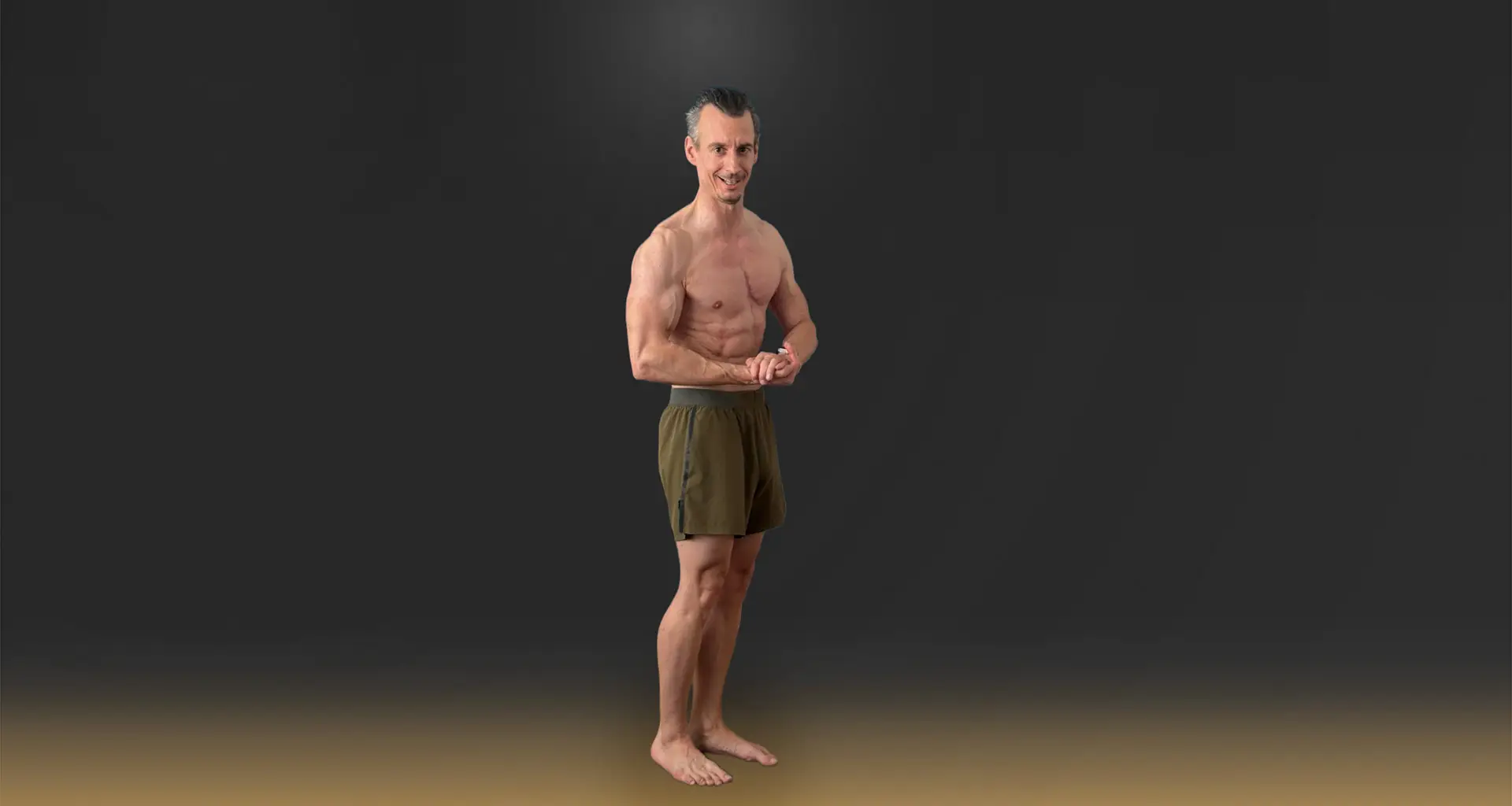
EAT (Exercise Activity Thermogenesis)
EAT describes energy expenditure from planned training: lifting, cardio, conditioning. It is one of the four main components of TDEE alongside NEAT, TEF and BMR.
Content is for education and context, not personal medical, nutrition, training or therapy advice. If you have medical conditions or uncertainties, consult qualified professionals.
Definition and where it fits
EAT is the energy you burn through deliberately planned exercise. NEAT covers all non-exercise movement in daily life. EAT is scheduled, trackable and can swing a lot between training and rest days.
In a TDEE system, EAT is a lever: higher expenditure on training days, lower on rest days. For hardgainers, the point is not “burn more calories”. The point is the anabolic signal and recovery, not maximum output.
- Planned: you choose the dose and intensity (unlike NEAT which is mostly automatic).
- Variable: training vs. rest days can differ substantially in expenditure.
- Systemic: EAT interacts with NEAT, TEF and BMR to form TDEE.
4 factors for smarter training energy expenditure
- Duration: 60 minutes usually burns more than 30, but quality beats quantity.
- Intensity: hard sets (RIR 1–3) and HIIT cost more than easy mobility work.
- Body mass: higher body weight usually means higher EAT for the same session.
- Training mode: lifting, intervals and steady cardio differ a lot in cost.
Tip: wearables often overestimate exercise calories. Use them for trends, not as absolute truth.
EAT during a lean bulk
In a bulk, EAT is a tool, not the goal. Too much training volume can backfire: appetite drops, subconscious NEAT shifts, and your surplus evaporates.
- Strength training: 3–5× per week, progress and technique first, inside the MEV–MRV window.
- Cardio: 1–2× easy LISS (20–30 min) for health and recovery, not calorie burning.
- Calorie compensation: if training increases, add ~150–300 kcal to maintain your Lean Surplus.
- Recovery: with high volume, respect your SRA cycle.
Tool: Hardgainer Calorie Calculator
The Hardgainer Calorie Calculator helps you understand TDEE drivers and translate training frequency into a controlled surplus.
Mini FAQ
What is the difference between EAT and NEAT?
EAT is planned training (lifting, cardio). NEAT is day-to-day movement outside training (walking, chores, fidgeting). EAT is scheduled, NEAT is mostly automatic.
Should I train more to raise my TDEE?
Not as a default. In a bulk, the anabolic signal and recovery matter more than “calories burned”. Too much training can reduce appetite and stall progress.
Does cardio kill gains?
Dose and timing matter. A small amount of easy cardio can complement lifting. Excessive cardio can interfere with recovery.
"More training equals more muscle"
False. Growth comes from the balance of stimulus and recovery. Too much volume past your recovery ceiling leads to stagnation, not gains. Use RIR and RPE to keep effort productive.
Deep dive: Hardgainer Myth-Busting – Myth 2
Studies and evidence
Research on EAT shows: exercise energy expenditure is highly variable (roughly 5–30% of TDEE) and should be managed as a system together with nutrition and recovery.
- Poehlman (1989): A review: exercise and its influence on resting energy metabolism in man. EAT can contribute ~15–30% of TDEE, with high individual variability.
- Chung et al. (2018): NEAT: a component of total daily energy expenditure. Clear distinction between EAT (planned exercise) and NEAT (non-exercise activity).
- LeBlanc et al. (1984): Diminished dietary thermogenesis in exercise-trained human subjects. Trained individuals may show reduced TEF, consistent with adaptive energy efficiency.
Takeaway: Don’t treat EAT in isolation. Manage it together with NEAT, TEF, and overall energy availability.
This wasn’t just reading. That was commitment.
Progress needs a system. Get the Hardgainer Mission Briefing™.
Next steps