

Mindset for Hardgainers
Identity, patience, consistency, anti-comparison, plateau resilience. The inner backbone. A hard gainer rarely fails at the plan. He fails because the body thinks in months and the head thinks in weeks. Five pillars close that gap.
Patience as a number, not as a slogan
The most common reason people quit is a wrong expectation. So let us calculate it. Example: 70 kg body weight, Rate of Gain inside the corridor of 0.25 to 0.5 percent per week.
| Target | at 0.5 % per week | at 0.25 % per week |
|---|---|---|
| 1 kg | about 3 weeks | about 6 weeks |
| 2.5 kg | about 7 weeks | about 14 weeks |
| 5 kg | about 14 weeks | about 29 weeks |
| 10 kg | about 29 weeks | about 57 weeks |
These are kilos of body weight, not kilos of muscle. Part of it is water, glycogen and fat. That is exactly why the number in the bottom right is the honest one and not the one in the top left.
Quitting rarely comes out of nowhere. It happens at four or five very predictable points, and each one has a counter-move.
| Moment | What happens in your head | The counter-move |
|---|---|---|
| Week 4, nothing in the mirror | doubt about whether it works at all | Do not look in the mirror. Compare photo and tape. |
| Week 8, still very little | hunting for the better programme | Look at the table above. Week 8 is on schedule. |
| Right after a comparison in the feed | despair or self-delusion | Put your own progress photo from 12 weeks ago next to it. |
| The first real plateau | reflex to change everything at once | One variable, two weeks of observation. See System. |
| A bad day | skip it, because it will not be perfect anyway | Run the minimum version. The habit does not break. |
None of these is a character problem. All five are predictable, and predictable problems can be planned for.
The five pillars everything rests on
Identity, who you are decides what you repeat
Almost every hardgainer carries a label around: I am just one of those guys who has a hard time putting on weight. It sounds like a description but it works like an instruction. Every skipped meal, every set given away confirms it. The reversal is uncomfortable: action comes before belief, not the other way round. Not someone who builds once he weighs 75 kilos, but someone who eats the meal today and finishes the set. After enough repetitions the self-image turns on its own. Where it fails: the result gets waited for before the identity is allowed to change. That means waiting for something that would have to grow out of exactly that identity.
Patience, the time scale muscle grows on
Muscle building is not a weekly project. At a Rate of Gain of 0.25 to 0.5 percent per week, a 70 kilo person needs roughly 14 to 29 weeks for five kilos of body weight. That is not an opinion, that is division. In the mirror you see almost nothing in the first four weeks, because the change sits below your perception threshold, not because it is absent. Expectation management is part of the training. Where it fails: the time scale never gets calculated. Anyone who does not know that five kilos take half a year reads week eight as proof that it is not working.
Consistency, discipline beats motivation
Motivation is a feeling. Discipline is a structure. Feelings are the worst possible foundation for something that runs eighteen months. The week where you deliver seventy percent in a lousy mood beats the week at a hundred and twenty on a peak, because the first happens forty times a year and the second three. In practice that means a fixed training time, a fixed meal window, staples prepared in advance, so the question of whether you train today never gets asked. Where it fails: the plan assumes good days. The moment one is bad there is no minimum version, and one missed day becomes three.
Anti-comparison, Instagram is not a benchmark
The fastest way to destroy patience is comparing yourself to people whose starting point, genetics and timeline you do not know. The reel shows year five, not week eight. Comparison produces either despair or self-delusion, and both cost consistency. Your only usable benchmark is your own body twelve weeks ago: same photo, same light, same tape. Where it fails: the feed keeps running and your own progress photo does not exist. Without your own reference, only the foreign one is left.
Plateau resilience, a stall is a signal, not a verdict
Plateaus are part of the build, not its end. The SRA curve is cyclical and mesocycles necessarily run through phases without visible progress. Three tools help. First, normalise it: even advanced athletes go through weeks without strength gains. Second, think in blocks rather than weeks, because a flat stretch in week four of six is not a plateau. Third, start the iteration loop from the System: change one variable, observe for two weeks. Where it fails: at the first stall, programme, calories and frequency all get changed at once. After that it is impossible to tell what worked.

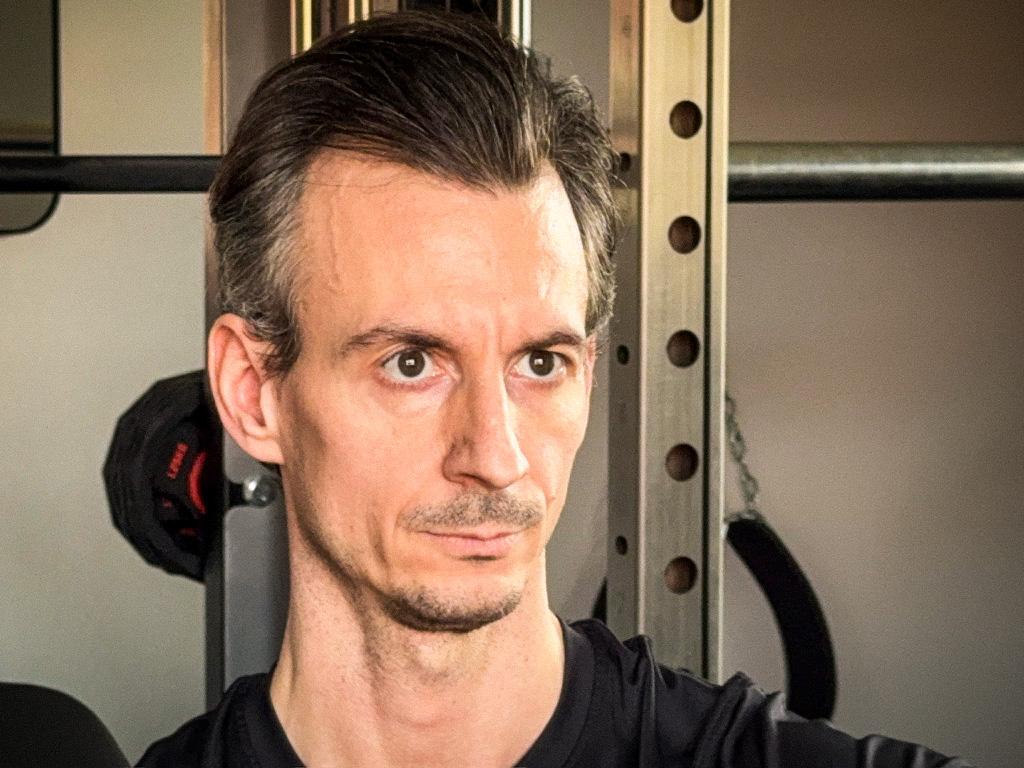
At 16 I weighed under 50 kilos. Today 75.52. The road in between was not only years of training, it was years of slowly becoming a different person. For a long time I thought: once I am built, I will become someone who builds. Wrong order. Identity does not arrive as a reward at the end, it grows out of the repetitions along the way. Not who I am decides what I do, but what I repeatedly do becomes who I am. Every meal I did not skip. Every set I did not give away. After a few thousand of them the self-image turned on its own.
Deep Dives
Article · Discipline Food Hygiene: the discipline that makes motivation unnecessary Why a clean meal structure is not an aesthetic question but the operational side of mindset. Fixed windows, prepared staples and calorically dense basics make the build independent of how you feel that day. The mental lever that flips into behaviour fastest. Article · Control Variable Rate of Gain: the number that turns patience into a decision Patience gets concrete the moment it has a number. How the corridor comes about, how to calculate the 7-day average properly, and why a clean build at a realistic rate takes half a year instead of eight weeks.Where hardgainers most often go wrong
Full overview: Hardgainer Myth Busting
What the research says
Two papers, and a clear boundary
Mindset is the thinnest researched part of this knowledge base. Two papers carry the two statements that are actually evidence-based. What goes beyond that is named below for what it is.
- Habits take weeks to months, not days. The meta-analysis on how long health behaviours need to become automatic is the best available answer to the expectation that routines bed in within a fortnight. That wrong expectation is what produces the week-four dropout. Time to Form a Habit, a Systematic Review and Meta-Analysis of Health Behaviour Habit Formation
- Fitness imagery in the feed measurably worsens body image in men. The experimental study on men viewing fitspiration images is the reason Pillar 04 exists on this page instead of being a footnote. Comparison is not a character flaw, it is a measurable effect. The differential impact of viewing fitspiration and thinspiration images on men’s body image concerns
What is not covered by studies
Identity-based behaviour change, the one-variable rule at plateaus and the recommendation to compare yourself with yourself every twelve weeks are practice and plausibility, not evidence. There is no trial testing identity-based coaching against goal-based coaching in hardgainers. The numbers in the table above are arithmetic from the Rate of Gain corridor, not study results. We write that down, because a mindset page propped up with five loosely fitting citations produces the opposite of trust.
Mindset in the glossary
Every term on this topic, each explained, each one click away.
Tools that turn mindset into behaviour
Frequently asked questions
Why is mindset its own topic for hardgainers?
Because most hardgainers do not fail at the plan, they fail at the time scale. Muscle grows over months, the head calculates in weeks. Identity, patience, consistency, anti-comparison and plateau resilience decide whether a good plan even runs long enough to work.
Which pillars does this page cover?
Five. Identity, meaning who you believe you are. Patience, meaning which time scale is realistic. Consistency, meaning what happens on a bad day. Anti-comparison, meaning what you measure against. And plateau resilience, meaning what you do at a stall.
Is mindset not just more motivation?
No, and that is the central misconception. Motivation is a feeling that comes and goes. Mindset is structure: fixed routines, an honest benchmark, clear rules for the bad day. Discipline beats motivation because it does not depend on how you feel. What that looks like day to day is under Food Hygiene.
Does this page replace the Hardgainer Guide?
No. The Hardgainer Guide is a step by step course from self-test to monitoring. This page is the topic overview: which self-image carries the build and where to click to put it into practice.
How long does it really take before you see something?
Calculate it instead of guessing. At 70 kg and a Rate of Gain of 0.25 to 0.5 percent per week, five kilos of body weight take roughly 14 to 29 weeks. In the mirror you see almost nothing in the first four weeks, because the change sits below your perception threshold. That is why photos and a tape measure beat the mirror.
What do I do on days with zero motivation?
Do not make the decision at all. Fixed training time, fixed meal window, staples prepared in advance. If the day is bad anyway, the minimum version applies: turn up and do the main lifts, even with less weight. One session at seventy percent is worth infinitely more than a missed one, because it does not break the habit.
How do I handle a plateau without throwing everything out?
First check whether it is one. Four flat weeks inside a six-week block are the arc, not a plateau. If it is one: change one variable, observe for two weeks, then the next. The reflex to swap programme, calories and frequency at once makes the result unreadable. The rules for that are under System.
How often should I photograph or measure myself?
Every four weeks is enough, under identical conditions: same time of day, same light, same pose, same measuring points. More often gains you nothing, because the change in between is smaller than the noise. The comparison always runs against your own last photo, never against someone else’s.
Other pillars
All six pillars in the Knowledge Base
One clean step every week.
One clear mission per week in your inbox. No hype, no filler, plus new drops before anyone else.
 Hardgainer Hacks™ the moment you confirm. 10 strategies for real mass gain, straight to your inbox.
After signing up you get a confirmation email (double opt-in). Click it to confirm, otherwise nothing can be sent. Details on data processing in our Privacy Policy.