Hardgainer Test & Quiz: Am I a Hardgainer?
The hardgainer test above — often called the hardgainer quiz — answers am I a hardgainer not with a gut feeling, but with a bottleneck score. A hardgainer does not gain weight by magic. Almost always the weekly balance is off: too few calories, not enough protein, too much daily activity (NEAT), a training plan without progression, or recovery that breaks down. The opposite — a softgainer, who gains weight quickly — has exactly the reverse lever. The test shows you which bottleneck is pulling hardest right now.
In short
Test or quiz? Same tool — quiz is just the playful name for the same structured hardgainer test with a score and a result.
Hardgainer or softgainer? Two ends of one scale. If you eat and still do not gain, you lean hardgainer; if you put on fat as easily as muscle, you are a softgainer. More on this: What is a Hardgainer?
The 5 channels that control muscle growth
- Intake: calories and protein too low or too inconsistent. Start here: Maintenance Calories, Lean Surplus.
- NEAT & Cardio: high daily expenditure eats the surplus. More on this: NEAT, TDEE.
- Training: too little stimulus or no progressive overload. Manage it with RIR.
- Recovery: sleep and stress tip the SRA balance. Tool: Deload.
- Consistency: too much chaos, too little routine — the underrated bottleneck.
Frequently asked questions
What is a hardgainer?
A hardgainer struggles to gain weight even with training because intake and actual expenditure do not match. Common causes are too few calories in everyday life, fluctuating appetite, high NEAT, or a plan that does not manage training and recovery cleanly.
Why am I not gaining weight even though I eat a lot?
Most of the time a lot is imprecise: portion sizes, skipped meals, or high daily expenditure push down the weekly balance. The fastest fix is a measurable surplus plus tracking your weight trend over 10 to 14 days.
How does the Hardgainer Test work?
The test asks 9 questions about weight trend, tracking, hitting your targets, NEAT, cardio, strength training, progression, sleep and stress. From your answers it calculates a bottleneck score and shows which area is slowing your progress the most.
What do the result ranges mean?
The score shows how strong your bottleneck is. Low means you are close and one specific lever is missing. Mid means one area is reliably holding you back. High means several bottlenecks overlap, most often intake and recovery at the same time.
How big should my calorie surplus be?
Start moderate and check your weight trend after 10 to 14 days. If nothing moves, increase step by step instead of eating blindly. The Hardgainer Calorie Calculator gives you a clean baseline.
What are the next steps after the test?
Determine your calorie needs, set up a training plan within a system, secure recovery. Then review your weight trend weekly via the weekly average and adjust.
Is this a hardgainer test or a hardgainer quiz?
Both mean the same thing. Hardgainer test and hardgainer quiz are two names for the same thing: 9 short questions that surface your biggest bottleneck to building muscle. Quiz sounds more playful, but the evaluation behind it is the same structured bottleneck analysis with a score and concrete next steps.
What is the opposite of a hardgainer?
The opposite is a softgainer (also easygainer): someone who gains weight quickly — muscle as well as fat. Hardgainer and softgainer mark the ends of a scale of metabolic rate, NEAT and appetite. The test shows you where on that scale your bottleneck sits. Background: What is a Hardgainer?
Sources
Context
Weight gain follows energy balance: if you are not gaining, you are not in a surplus averaged across the week — regardless of how much it feels like you eat. Tracking over 10 to 14 days makes this visible and manageable.
- Hall KD et al. (2012) — Energy balance and its components. PubMed 22258266
- Slater GJ et al. (2019) — Is an Energy Surplus Required to Maximize Skeletal Muscle Hypertrophy? PubMed 31482143
Practical takeaway: identify the bottleneck, implement one lever cleanly first, review weight via the weekly average.
About the author
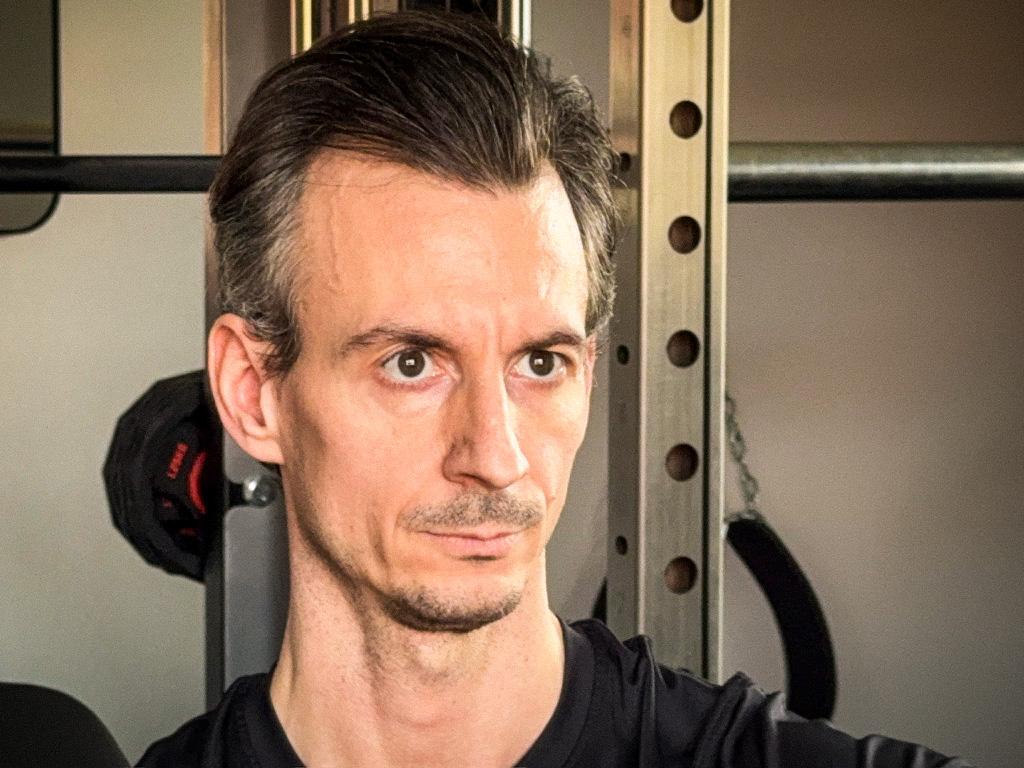
Mag. Christian Schönbauer
Founder & Managing Director · Hardgainer Performance Nutrition GmbH
Training since 1999, starting under 50 kg. Over 25 years of training and nutrition practice translated into a system for hardgainers.
To the author page →
Note
This result is practical guidance, not a medical diagnosis. In case of strong, unexplained weight loss, heart racing, shortness of breath or persistent exhaustion, please seek medical advice. Emergency: Europe 112 • Austria EMS 144.